🇬🇧 English | 🇫🇷 Français
Senegal is one of seven African countries joining the leading group of the GSMA’s Digital Africa Index 2026 this year. Released on 18 November in Cape Town, the index also highlights a 64-point gap between mobile coverage and actual mobile internet use across the continent.
The GSMA, the global mobile industry association, launched the new edition of its Digital Africa Index on Wednesday 18 November 2026 at the GSMA Digital Africa Summit in Cape Town, South Africa. According to its press release, Egypt, Ghana, Nigeria, Rwanda, Senegal, Seychelles and Tunisia have joined Kenya, Mauritius and South Africa in the group of countries that combine stronger digital development with more enabling policy and regulation. The group had three members in 2024; it now has ten.
Key points
- The ranking: Senegal is one of seven new entrants to the index’s leading group, which now includes ten countries.
- The finding: mobile broadband covers 92% of Africa’s population, but only 28% use mobile internet on their own device.
- The recommendation: the GSMA is calling for import duties and taxes on entry-level smartphones to be removed.
- The unknown: the press release does not publish Senegal’s detailed score.
Two indices, 54 countries
The index assesses all 54 African countries using two measures: the Digital Nations and Society Index (DNSI), which tracks digital development and adoption, and the Digital Policy and Regulatory Index (DPRI), which covers government policy and sector regulation. Countries in the leading group score above 50 out of 100 on both, according to Ecofin Agency. South Africa (69/100) and Kenya (65/100) post the highest DNSI scores, while Egypt and Ghana recorded the largest policy and regulatory gains since 2024, according to the GSMA.
The press release does not give Senegal’s score. In December 2025, an earlier GSMA study presented in Dakar reported that Senegal’s DPRI score had fallen from 69 to 62 out of 100 after new tax measures were adopted in October 2025, as SocialNetLink reported. Country-level data are available in the full report published by GSMA Intelligence.
A 64-point usage gap
The main takeaway of the 2026 edition concerns usage. Mobile broadband networks now cover 92% of Africa’s population, but only 28% of Africans use mobile internet on their own device, a 64-point gap that the GSMA says is the largest in the world.
“Africa has made real progress in expanding mobile broadband coverage. The challenge now is ensuring that more people can actually use it,” said Angela Wamola, Head of Africa at the GSMA, in the press release.
Smartphone costs in focus
Only nine of the 54 countries assessed impose neither sector-specific taxes nor import duties on mobile handsets, down from ten in 2024, the association notes. It points to South Africa, which removed a 9% excise duty on smartphones priced below R2,500 in April 2025: according to GSMA analysis, monthly sales of entry-level smartphones rose from around 250,000 units in March 2025 to nearly 460,000 in February 2026, an 80% increase. The organisation is urging governments that still apply import duties or sales taxes to these devices to remove them. It also highlights device financing and spectrum pricing, an area where it has backed initiatives such as the $40 smartphone project in the DRC.
The report also looks at digital public services. It identifies five areas where implementation can fall short: access, public value, trust and accountability, inclusion, and coordination across government agencies.
For Senegal, entry into the leading group comes as digital taxation remains a matter of debate. The country’s detailed scores in the full report should show which criteria drove this progress.
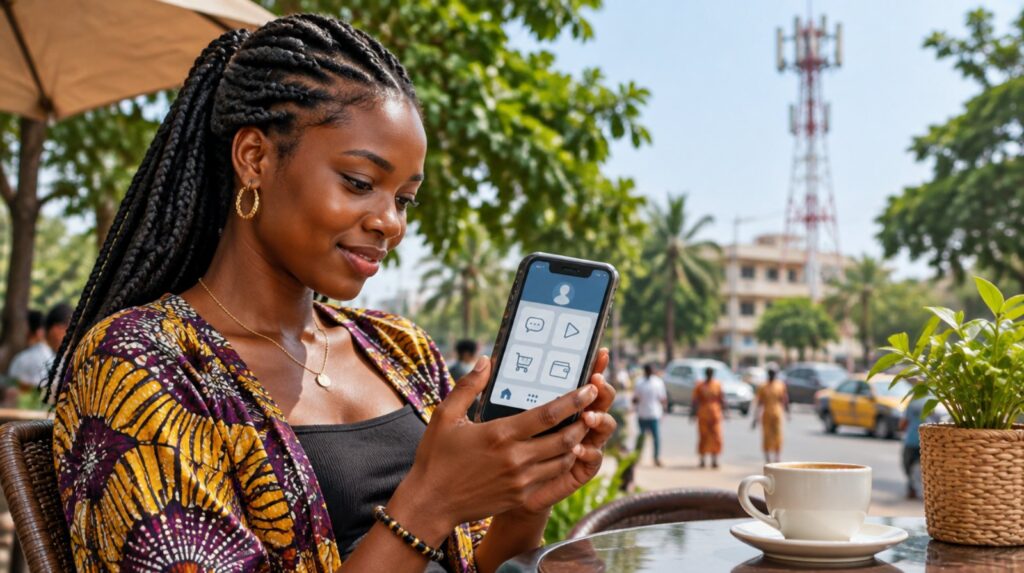
AI-generated illustration
Read also



Ne manquez aucune actualite tech et startup
Rejoignez notre chaine WhatsApp et abonnez-vous a SNL TV sur YouTube.
Rejoindre WhatsAppVoir SNL TV sur YouTube