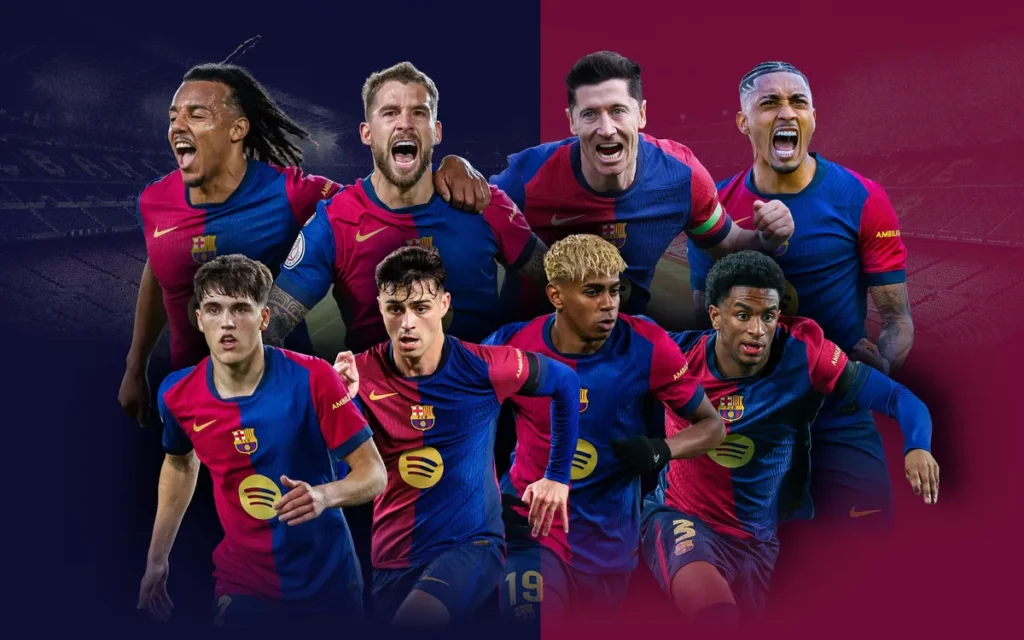
The match between Albacete and FC Barcelona generated an unusually high volume of Google searches in Côte d’Ivoire, according to Google Trends data.
This surge may seem surprising given the sporting gap between the two teams, but it reflects a broader trend: the central role European football now plays in African digital consumption.
Interest that goes beyond the sporting stakes
From a purely sporting perspective, the fixture did not rank among the major highlights of the international football calendar. Yet it attracted significant attention from Ivorian internet users, comparable to that usually seen during top-tier clashes. This disconnect between the sporting importance of the match and its digital resonance raises questions about contemporary patterns of football consumption.
FC Barcelona, a club historically associated with a distinctive playing style and a strong identity, enjoys considerable symbolic capital across Africa. This reputation has been built over decades, driven by iconic players and a global communication strategy that integrated African markets at an early stage.
The structuring role of digital platforms
Analysis of online behaviour shows that interest in the match emerged well before kick-off. Predicted line-ups, rumours surrounding starting players, training footage and reminders of past achievements circulated widely across social media and video platforms.
In this context, Google functions less as a simple search engine than as a barometer of collective attention. Match-related searches reflect a demand for real-time information, fuelled by discussions on X (formerly Twitter), Facebook, TikTok and WhatsApp, where content linked to European football overwhelmingly dominates user feeds.
Ivorian youth at the heart of the phenomenon
In Côte d’Ivoire, this digital mobilisation can largely be explained by the country’s demographic profile. Predominantly young and highly connected, the population consumes football as a global cultural product, often independently of local competitions or strictly national stakes.
European football—particularly that of major Spanish and English clubs—has become a key vehicle for identity and digital social interaction. Matches turn into moments of collective conversation, blending tactical analysis with debate, betting discussions, humour and passionate opinions.
Football as an attention economy
Beyond its cultural dimension, this phenomenon highlights an economic reality: football has become an attention industry, where each match can generate global media impact regardless of its intrinsic sporting significance.
Broadcasters, sponsors, streaming platforms and betting operators increasingly rely on this growing African audience, now considered strategic. Search data from Côte d’Ivoire illustrates the continent’s deeper integration into the global circuits of sports consumption.
A signal for African media
For African digital media outlets, this trend sends a clear message: European football remains a powerful driver of traffic and engagement—provided it is approached with analytical depth and local context. The challenge is no longer merely to report results, but to explain why and how these events resonate locally.
The enthusiasm surrounding a match like Albacete–FC Barcelona underscores the fact that, in the digital age, football is no longer just a sporting spectacle but a global social phenomenon—one in which Africa has become a central player.
Post Views: 44