🇬🇧 English | 🇫🇷 Français
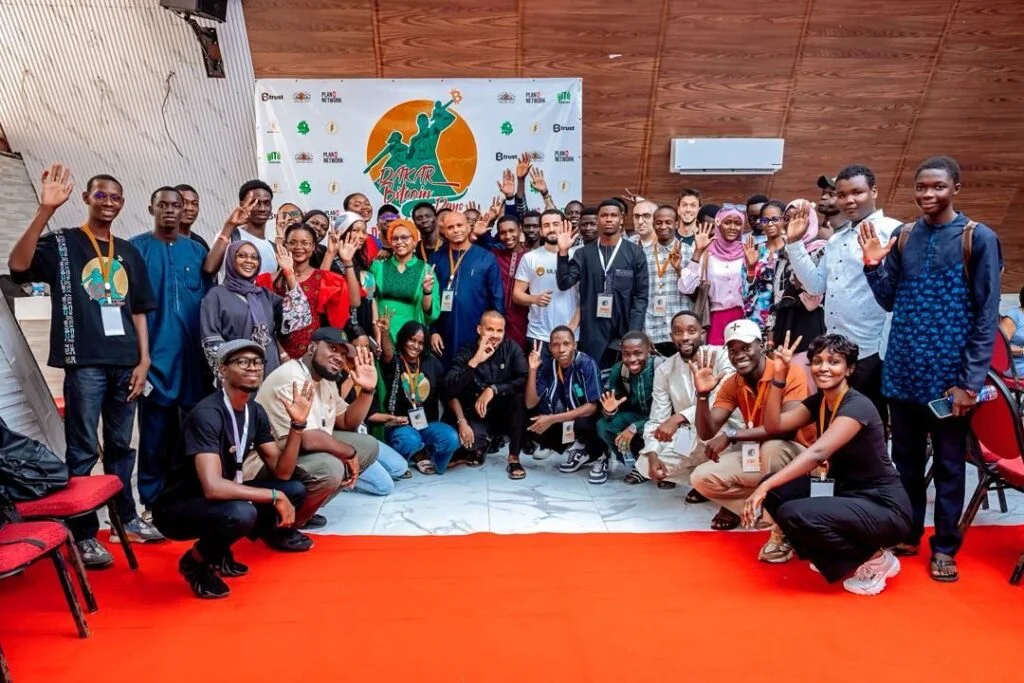
On 27 and 28 November 2026, Dakar will host the fourth edition of Dakar Bitcoin Days at SEANEMA, the Sea Plaza cinema. In a world where digital technologies are gradually reshaping economic exchanges, payment systems and our relationship with money, the event aims to bring together players from across the ecosystem to better understand Bitcoin and crypto-assets, explore their practical applications and reflect on their potential for the development of African economies.
Bitcoin: a technology that goes far beyond investment
When Bitcoin is mentioned, the first associations are often price, speculation or market swings. Yet reducing Bitcoin to its financial dimension means missing an essential part of its potential.
Bitcoin is first and foremost an open, decentralised monetary network, accessible to anyone with an Internet connection. It relies on a technological infrastructure that makes it possible to transfer value without always requiring a traditional financial intermediary.
Beyond its monetary function, its ecosystem opens up prospects in several areas: international payments, money transfers, trade, entrepreneurship, digital services and the development of new financial infrastructure.
The Lightning Network, a technology built on top of Bitcoin, enables fast, low-cost payments, opening up new possibilities for everyday transactions.
For countries such as Senegal, where diaspora remittances, cross-border trade, financial inclusion and access to payment services are major issues, these innovations deserve particular attention.
The point is not to see Bitcoin as a miracle solution to all of the continent’s economic challenges, but to understand how it works, assess its limits and identify uses that could meet real needs.
Senegal and Africa facing the transformation of the digital economy
The development of digital assets is now attracting the interest of financial institutions, central banks and governments around the world.
In West Africa, the international conference on crypto-assets and digital innovation held by the BCEAO in Dakar on 8 May 2026 reflects the growing importance of these issues in institutional thinking.
In the United States, the authorities are continuing work to clarify the rules applicable to different categories of digital assets. In Europe, the MiCA regulation sets out a harmonised framework for the service providers and issuers concerned.
At the same time, cybersecurity incidents affecting some exchange platforms are a reminder that adopting these technologies must go hand in hand with solid knowledge of security, risk management and user protection.
For Senegal, the challenge is therefore twofold: not to remain a spectator of these transformations, and to equip itself to understand these technologies, their opportunities, their risks and their economic implications.
How can payments between Senegal and its trading partners be made easier? How can certain money transfer operations be improved? How can Senegalese entrepreneurs gain access to new markets? How can young people be trained in the skills needed to build tomorrow’s digital infrastructure?
These are all questions that deserve to be asked collectively.
A transformation that requires the involvement of all players
The future of Bitcoin and digital technologies in Africa cannot be built by a single category of players.
Public institutions have an essential role to play in understanding the issues, developing appropriate frameworks and protecting citizens.
Banks and financial institutions can contribute to thinking on the evolution of payment services, infrastructure interoperability and new business models.
Companies and entrepreneurs, for their part, can experiment with solutions that meet concrete needs in trade, international transfers and digital services.
Universities, researchers and training institutions also have a decisive role in producing knowledge, conducting research and developing local skills.
Finally, developers, Bitcoin communities and grassroots educators can help make these technologies accessible, understandable and usable by as many people as possible.
It is precisely this convergence of skills, experience and perspectives that Dakar Bitcoin Days seeks to encourage.
The aim is not to set traditional financial systems against new technologies, but to create a space for dialogue that allows everyone to understand ongoing changes and identify opportunities for collaboration.
Dakar Bitcoin Days IV: two days to understand, debate and build
It is with this in mind that the fourth edition of Dakar Bitcoin Days will take place on 27 and 28 November 2026 at SEANEMA – Sea Plaza Cinema, in Dakar.
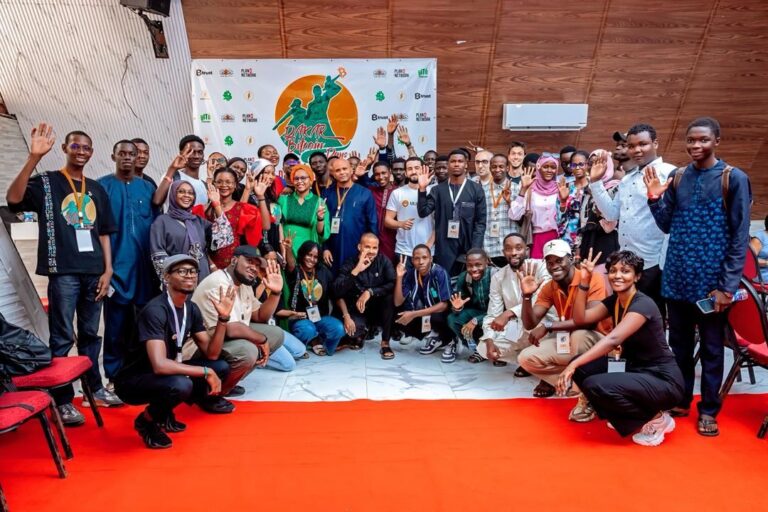
Since its first edition in December 2022, the event has gradually established itself as a platform for meeting and sharing knowledge about Bitcoin, its applications and its ecosystem.
After three editions that brought together participants from a wide range of backgrounds, this fourth edition aims to further broaden the dialogue between institutional, economic, technological and community players.
The programme will be built around two complementary themes.
Day 1 – An institutional approach to crypto-assets
The first day will focus on the relationship between Bitcoin, public institutions, central banks and financial systems.
Discussions will cover issues such as regulation, monetary sovereignty, financial stability, public policy and the prospects offered by digital innovation.
The aim will be to foster a better understanding of institutional issues and to allow the various players to compare their analyses.
Day 2 – Decentralised cross-border payments
The second day will be devoted to decentralised payment solutions and their potential to facilitate economic exchanges across the continent.
As the African Continental Free Trade Area (AfCFTA) is being implemented, cross-border payments are a major issue for businesses, traders, entrepreneurs and diasporas.
Bitcoin and the Lightning Network offer avenues to explore for facilitating certain value transfers and developing new commercial uses.
The discussions will in particular consider the technical, economic and regulatory conditions needed to envisage their use in African contexts.
Complementary expertise to enrich the debate
This fourth edition will bring together speakers from a range of fields: finance, economics, cryptography, cybersecurity, entrepreneurship and technological innovation.
Announced speakers include:
- Abdoulaye Cissé — Executive Director in charge of risk management and IT security at CGF Bourse
- Charlene Fadirepo — founder and CEO of Mango Digital Strategies
- Dr Abdoulaye Ndiaye — economist and professor at New York University (NYU)
- Dr Michel Seck — PhD in cryptography and professor at the École polytechnique de Thiès
- Ndongo Samba Sylla — economist
- Colonel Aly Mime — Director General of Cipher and Information Systems Security (Directeur général du Chiffre et de la Sécurité des Systèmes d’information)
- Antoine Ngom — Managing Director of GSIE and president of OPTIC
- Karim Sy — founder of Jokkolabs
- Modou Sall — mobile money expert
- Sébastien Ramos — entrepreneur
The diversity of these profiles will make it possible to compare perspectives and move beyond purely technical or financial approaches. The aim is to generate ideas that can lead to concrete collaborations and initiatives.
Understanding Bitcoin in order to make it our own
Making Bitcoin accessible to all is also one of the core objectives of Dakar Bitcoin Days.
In many African countries, a large part of the population is still discovering these technologies through social media, sometimes exposed to misleading messages, promises of unrealistic returns and fraudulent platforms.
Education and awareness-raising are therefore essential to distinguish Bitcoin from other crypto-assets, understand how it works, identify the risks and adopt good security practices.
Students, traders, entrepreneurs, finance professionals, developers, researchers and citizens must be able to access reliable information suited to their realities.
Particular attention is paid to language accessibility, with sessions in French, English and Wolof, to make it easier to share knowledge with different audiences.
Understanding a technology is the first step towards being able to assess it, use it and possibly contribute to its development.
Building an African vision of tomorrow’s technologies
Africa has a dynamic youth, significant entrepreneurial potential and considerable needs in digital and financial infrastructure.
But turning these assets into opportunities requires investment in knowledge, training, research and collaboration between the various players.
Bitcoin is not a single answer to Africa’s development challenges. Its value also lies in the questions it raises and the technological possibilities it opens up: access to an open monetary network, international value transfers, new payment models and the development of skills in strategic technology fields.
Dakar Bitcoin Days IV thus aims to contribute to a collective reflection on the place that Senegal and other African countries can take in these transformations.
On 27 and 28 November 2026, Dakar will not only be a place to discover Bitcoin. It will be a space for dialogue between institutions, companies, researchers, entrepreneurs, developers and citizens, with a shared ambition: to better understand these technologies in order to play an active part in building Africa’s digital economy.
Practical information
- Event: Dakar Bitcoin Days IV
- Dates: 27 and 28 November 2026
- Venue: SEANEMA – Sea Plaza Cinema, Dakar
- Official website and registration: https://dakarbitcoindays.com/
Ne manquez aucune actualite tech et startup
Rejoignez notre chaine WhatsApp et abonnez-vous a SNL TV sur YouTube.
Rejoindre WhatsAppVoir SNL TV sur YouTube